
Part 1: ACTS & PROVE — The Foundation of Firearms Safety
ACTS and PROVE are the two most important safety procedures in Canadian firearms handling. They form the absolute foundation of both the CFSC and CRFSC courses and are tested extensively on both the written and practical exams. You must know these cold — they will appear on your exam multiple times in different contexts.

ACTS: The Four Firearms Safety Rules
ACTS is a mnemonic for the four fundamental rules of firearms safety. These rules apply at ALL times, in ALL situations, with ALL firearms — whether at a range, in the field, in your home, or handling any firearm for any reason.
A — Assume
Assume every firearm is loaded. Never take anyone's word that a firearm is unloaded. Always visually verify by performing the PROVE procedure yourself.
C — Control
Control the muzzle direction at all times. Always keep the muzzle pointed in the safest available direction — away from yourself and all other people.
T — Trigger
Trigger finger must be kept off the trigger and out of the trigger guard until you are ready to fire. Rest your finger along the side of the firearm (often called "indexing").
S — See
See that the firearm is unloaded. PROVE it safe every time you pick up, pass, or receive a firearm. Verify visually and physically.
PROVE: Verifying a Firearm Is Safe
PROVE is the five-step procedure for verifying that a firearm is safe (unloaded). You must perform this every time you pick up, receive, or find a firearm. The steps must be performed in order.
P — Point
Point the firearm in the safest available direction. This is always the first step.
R — Remove
Remove all cartridges. Take out the magazine, empty the tubular magazine, or remove shells from a break-action's chambers.
O — Observe
Observe the chamber. Visually look into the chamber to confirm it is empty. Use light if needed.
V — Verify
Verify the feeding path. Check that the magazine well, feeding mechanism, and any tubular magazine are completely clear of ammunition.
E — Examine
Examine the bore. Look through the barrel from the breech end (NEVER the muzzle) to check for obstructions like mud, snow, or lodged bullets (possible squib load).
⚠️ Exam Tip
ACTS & PROVE questions appear on EVERY CFSC and CRFSC exam. You will be asked about the order of steps, what each letter stands for, and when to apply them. The practical exam requires you to physically demonstrate PROVE on multiple firearm types. Practice until these become automatic.
Part 2: Storage, Display & Transport Regulations
Storage and transport regulations are the most commonly failed exam topics. The rules differ significantly between non-restricted and restricted firearms, and many students confuse the two. Pay close attention to the differences — one word can mean the difference between a correct and incorrect answer.
Non-Restricted Firearms Storage
Non-restricted firearms must be stored unloaded AND meet ONE of the following three conditions (any single one is sufficient):
- Option 1: Rendered inoperable by a secure locking device (trigger lock, cable lock)
- Option 2: Stored in a locked container
- Option 3: Stored in a room that has been secured for safe storage of firearms
Ammunition must be stored separately from the firearm OR locked with the firearm in a container. "Stored separately" means the ammunition is not readily accessible to the firearm — for example, in a different room or a separate locked container.
Restricted Firearms Storage (CRFSC-Specific)
Restricted firearms have stricter storage requirements than non-restricted firearms. They must be stored unloaded AND meet ALL of the following conditions (not just one):
- Condition 1: Rendered inoperable by a secure locking device (trigger lock, cable lock)
- Condition 2: AND stored in a locked container, vault, or safe
- Alternatively: stored in a vault, safe, or room that has been specifically built or modified for the secure storage of restricted firearms
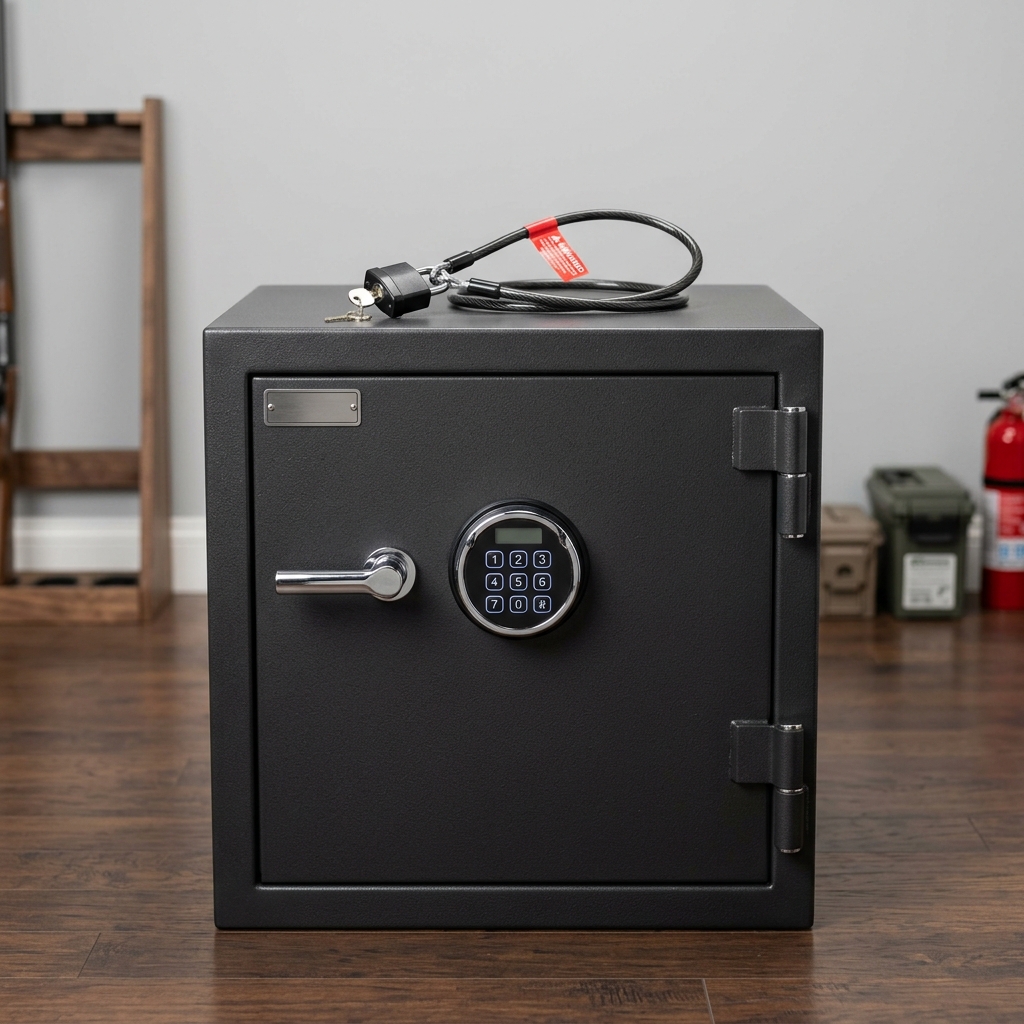
❌ Common Mistake
Non-restricted = ONE OF (trigger lock OR locked container OR locked room).
Restricted = BOTH (trigger lock AND locked container).
The key word is AND vs. OR. Many students confuse these requirements and fail this question. Remember: restricted firearms require DOUBLE the security.
Transport Regulations
Non-restricted transport: The firearm must be unloaded. While not legally required, it is strongly recommended to use a case and/or trigger lock during transport. The firearm should not be visible.
Restricted transport (CRFSC): The firearm must be unloaded, rendered inoperable by a secure locking device (trigger lock), placed in a locked opaque container, and the transport must comply with your ATT (Authorization to Transport) conditions. You must take a reasonably direct route.
Ammunition in transit: Ammunition may be transported with the firearm but must be stored separately from the firearm (not in the magazine or chamber). Keep ammunition in a separate bag or compartment.
Part 3: Firearm Parts, Action Types & Operation
Understanding firearm actions and their components is essential for both exams. The CFSC focuses on rifle and shotgun actions (bolt, pump, lever, break, semi-auto), while the CRFSC focuses on handgun mechanisms (single-action, double-action, striker-fired).
Common Action Types (CFSC)
| Action Type | How It Works | Common Firearms |
|---|---|---|
| Bolt-Action | Manually lift and pull bolt handle to eject, push forward to chamber | Hunting rifles (Remington 700, Tikka T3x) |
| Pump (Slide) Action | Slide forestock back and forward to cycle | Shotguns (Remington 870, Mossberg 500) |
| Lever-Action | Cycle finger lever behind trigger to eject and load | Rifles (Winchester 94, Marlin 336) |
| Break (Hinge) Action | Barrel(s) hinge open from receiver for loading | Single/double barrel shotguns, O/U, SxS |
| Semi-Automatic | Gas/recoil cycles action automatically after each shot | Rifles, shotguns, handguns |
| Revolver | Rotating cylinder holds multiple chambers | Handguns (Smith & Wesson, Ruger) |
Key Firearm Components to Know
- Muzzle: The front end of the barrel where the projectile exits
- Breech: The rear of the barrel where the cartridge is loaded
- Chamber: The section of the barrel that holds the cartridge ready to fire
- Action: The mechanism that loads, fires, and ejects cartridges
- Bore: The interior of the barrel through which the projectile travels
- Rifling: Spiral grooves inside the barrel that spin the bullet for accuracy
- Extractor: Grips the cartridge case and pulls it from the chamber
- Ejector: Expels the cartridge case from the firearm after extraction
- Safety: Mechanical device to help prevent firing — NOT foolproof
- Stock: The portion held against the shoulder (rifles/shotguns)
- Forestock/Fore-end: Forward part of the stock — operates pump-action cycling
Handgun Mechanisms (CRFSC-Specific)
The CRFSC exam focuses heavily on handgun operation. You must understand the three main trigger mechanisms:
- Single-Action (SA): The hammer must be manually cocked before each shot. Trigger only releases the hammer. Lighter trigger pull but requires manual cocking. (Example: 1911-style pistols)
- Double-Action (DA): Pulling the trigger both cocks and releases the hammer. Heavier trigger pull but no manual cocking needed. Many revolvers operate in DA mode. First shot can be DA, subsequent shots SA (DA/SA combo).
- Striker-Fired: Uses an internal spring-loaded striker instead of an external hammer. Common on modern semi-automatic pistols. Consistent trigger pull for every shot. (Example: Glock series)
Part 4: Ammunition Types, Calibre & Gauge
ALWAYS verify that the ammunition calibre or gauge matches the markings on your firearm before loading. Using incorrect ammunition can cause catastrophic failure, serious injury, or death. This is one of the most fundamental safety rules.
Cartridge Components
- Case: Metal container (brass, steel, aluminum) holding all components together
- Primer: Ignition-sensitive compound in the base that ignites when struck by the firing pin
- Propellant (Powder): Smokeless powder that burns rapidly, producing expanding gases
- Projectile: The bullet (rifles/handguns) or shot pellets/slug (shotguns) that exits the barrel
Rimfire vs. Centrefire
- Rimfire: Primer compound is located in the rim of the cartridge case. The firing pin strikes the rim edge. Common example: .22 Long Rifle (.22 LR). Generally lower-powered and used for small game, target shooting, and training.
- Centrefire: Primer is contained in a small cup (primer pocket) in the centre of the cartridge base. Firing pin strikes the centre. Used in most rifle, handgun, and shotgun ammunition. Higher powered and more reliable than rimfire.
Calibre vs. Gauge
Calibre applies to rifles and handguns. It measures the internal barrel diameter in millimetres (e.g., 9mm, 7.62mm) or decimal fractions of an inch (e.g., .308, .22, .45). The calibre marked on the ammunition must match the calibre on the firearm.
Gauge applies to shotguns. It is based on the number of lead balls of the bore diameter that equal one pound. Key fact: smaller gauge number = larger bore. A 10-gauge shotgun has a LARGER bore than a 12-gauge. The exception is the .410, which is actually a calibre measurement (0.410 inches), not a gauge.
Magazine Capacity Limits (Critical for Exam)
| Firearm Type | Max Magazine Capacity | Exam Coverage |
|---|---|---|
| Semi-auto centrefire rifles | 5 rounds | CFSC & CRFSC |
| Semi-auto handguns | 10 rounds | CRFSC |
| Rimfire rifles (.22 LR) | No limit | CFSC |
| Manual action (bolt, pump, lever) | No limit | CFSC |
| Shotguns | No federal limit (some provincial hunting limits) | CFSC |
Malfunctions: Hangfire, Misfire & Squib Load
- Misfire: The cartridge does not fire when the trigger is pulled (click, no bang). Could be a bad primer or firing pin issue. Procedure: Treat as potential hangfire — wait 60 seconds with muzzle safe, then carefully unload.
- Hangfire: A noticeable delay between the trigger pull and the discharge. The primer ignites slowly. Procedure: Keep firearm pointed safely, wait at least 60 seconds before taking any action.
- Squib Load: A cartridge with insufficient powder charge — the bullet lodges in the barrel without exiting. Identified by a weak sound/recoil. Procedure: STOP firing immediately. Do NOT fire another round. Check barrel for obstruction. Firing another round into a barrel with a lodged bullet can cause the barrel to burst.
⚠️ Exam Tip
Magazine capacity limits are one of the most tested topics. Remember: 5 for semi-auto centrefire rifles, 10 for semi-auto handguns. Malfunction procedures — especially the 60-second wait for hangfire — are also heavily tested.
Part 5: Restricted Firearms — Handguns, ATT & RPAL
This section covers CRFSC-specific material that does not appear on the CFSC exam. If you are only taking the CFSC, you can skip this section. If you are pursuing an RPAL, this is critical material.
What Makes a Firearm "Restricted"?
A firearm is classified as restricted in Canada if it meets any of the following criteria:
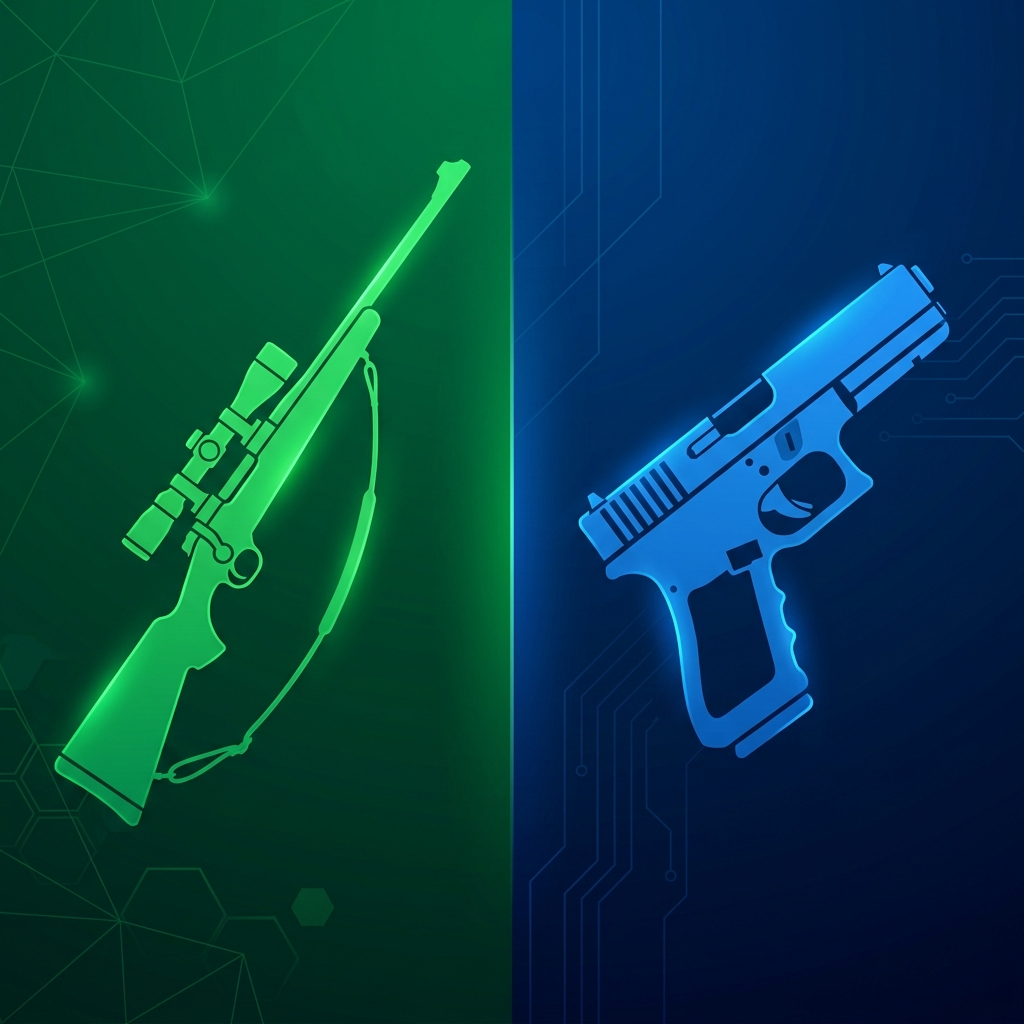
- Handguns with a barrel length greater than 105mm (handguns with barrels 105mm or less are prohibited)
- Semi-automatic centrefire firearms with barrel length less than 470mm
- Firearms that can be fired when reduced to an overall length of less than 660mm by folding, telescoping, or similar means
- Firearms prescribed as restricted by the Regulations Prescribing Certain Firearms and Other Weapons as Restricted
Authorization to Transport (ATT)
Since the Common Sense Firearms Licensing Act (December 2015), ATT conditions are automatically attached to your RPAL. You do not need to apply for a separate ATT document for routine transport. The automatic ATT covers transport between:
- Your home and an approved shooting club or range
- Your home and a gunsmith
- Your home and a firearms dealer (for purchase, sale, repair)
- Your home and a firearms show
- Your home and a police station (for disposal or verification)
- During a move between residences
You must take a reasonably direct route and make no unnecessary stops. The ATT does NOT permit carrying your restricted firearm to Crown land, campgrounds, or any location other than those listed above. If you need to transport restricted firearms to any other location, you must apply for a short-term ATT from your provincial CFO.
Where You Can Use Restricted Firearms
Restricted firearms (handguns) may ONLY be discharged at an approved shooting range. Unlike non-restricted firearms, which can be fired on Crown land and private property, restricted firearms cannot be used for hunting (with very limited exceptions for wilderness protection permits). They are strictly range-use firearms in Canada.
Barrel Length and Classification Thresholds
| Barrel Length | Handgun Class. | Licence Needed |
|---|---|---|
| ≤ 105mm | Prohibited | Cannot be acquired (grandfathered only) |
| > 105mm | Restricted | RPAL required |
Part 6: Canadian Firearms Law & Licensing
Canadian firearms law is primarily governed by three pieces of federal legislation: the Firearms Act, the Criminal Code of Canada, and the associated regulations (particularly the Storage, Display, Transportation and Handling of Firearms by Individuals Regulations).
Licence Types
| Licence | Permits | Course Required | Min. Age |
|---|---|---|---|
| Minor's Licence | Borrow NR firearms under supervision | CFSC | 12 |
| PAL | Possess & acquire NR firearms | CFSC | 18 |
| RPAL | Possess & acquire NR + restricted firearms | CFSC + CRFSC | 18 |
Licence Application Process
- Complete the required safety course(s) — CFSC and/or CRFSC
- Pass both the written and practical exams (80% minimum on each)
- Receive your course completion certificate by mail (2-4 weeks)
- Complete RCMP Form 5592 (Individual Firearms Licence Application)
- Provide one passport-type photo, the $80 fee, and two personal references
- Submit to the RCMP Canadian Firearms Program
- Undergo continuous eligibility screening (background checks)
- 28-day mandatory waiting period (first-time applicants)
- Receive your licence in the mail (total process: 4-8 months typically)
Key Legal Requirements to Remember
- Licence must be on your person when in possession of a firearm (failure is an offence)
- Lost, stolen, or found firearms must be reported to police immediately
- Continuous eligibility screening: Your background is checked daily — criminal charges, protection orders, or mental health holds can trigger a licence review
- Licence renewal: PAL/RPAL must be renewed every 5 years
- Registration: Restricted firearms must be registered. Non-restricted firearms do not require registration (long-gun registry was abolished in 2012)
- Unsafe storage: Criminal offence under Section 86 of the Criminal Code — penalties include up to 2 years imprisonment (summary) or 5 years (indictable)
Ready to Test Your Knowledge?
Now that you've studied the material, put your knowledge to the test with our free practice exams.